Afghanistan operational narrative: DSST integration and coalition communications.
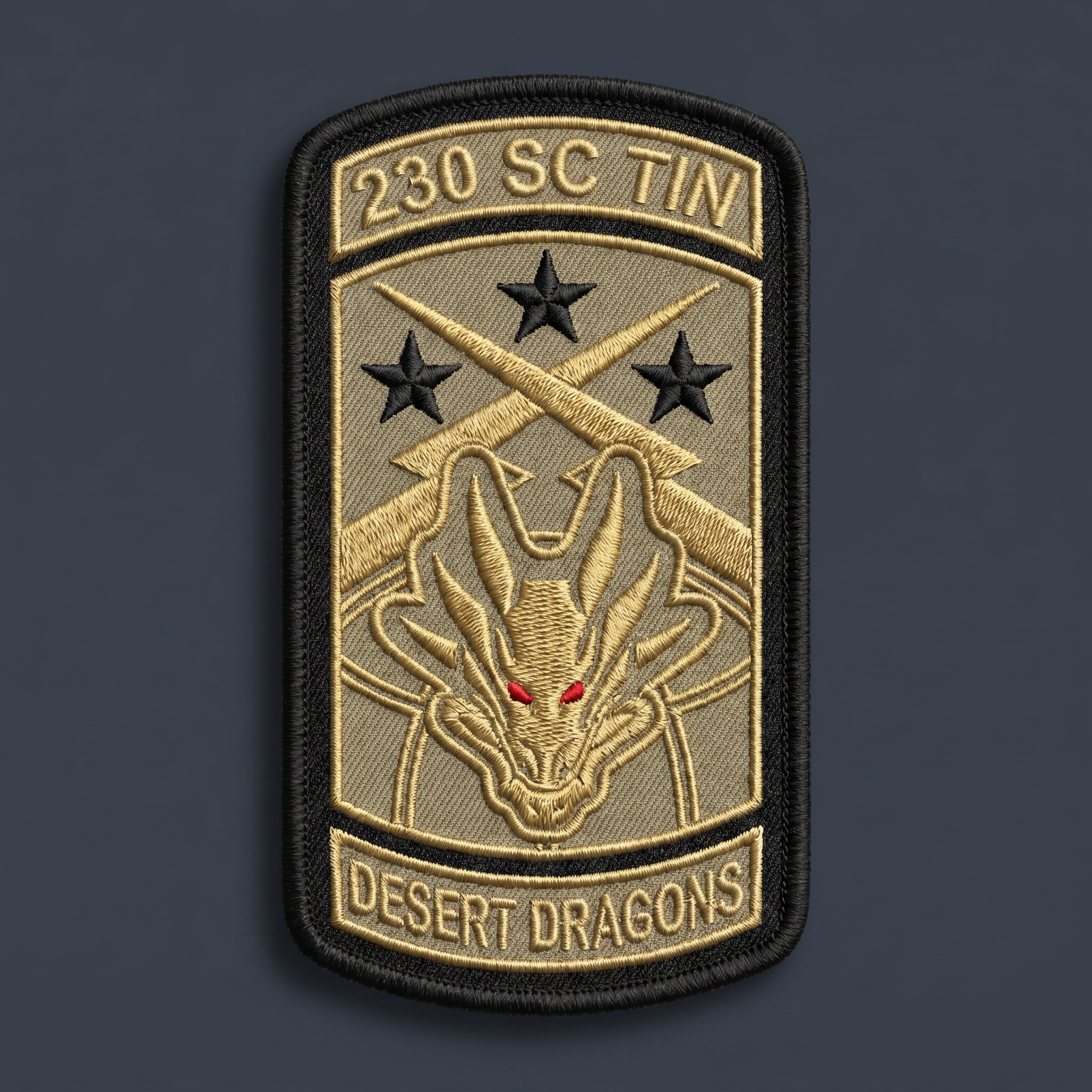
230th Signal Company, 2011–2012. Captain Jason E. Schnatterle — a first lieutenant at the time of service. Presented as background operational narrative, dated December 2025.



Executive summary
This narrative summarizes the operational achievements and combat service of Captain Jason E. Schnatterle during his deployment to Kandahar Province, Afghanistan, from September 2011 to June 2012. During this period, 1LT Schnatterle served as Officer in Charge of five Direct Signal Support Team (DSST) locations across Forward Operating Bases Nathan Smith, Pasab, Stone, Wilson, and Farah, and subsequently as Technical Control Facility (TCF) OIC at FOB Farah. His actions and innovations directly addressed critical signal-architecture failures and established the first fully integrated strategic communications node in the region — a capability subsequently reflected in Army doctrine and in the Signal Captains Career Course curriculum.
I. Transit to theater and initial assessment
In September 2011, the 230th Signal Company deployed to Kandahar Airfield as part of Operation Enduring Freedom. Upon arrival at the 25th Signal Battalion headquarters, personnel learned that operational requirements had changed significantly from pre-deployment planning. Nine enlisted soldiers and the rated officer had been directed to attend specialized training prior to deployment; upon arrival at the training location, the curriculum was discovered to be task-organized specifically for Iraq operations rather than Afghanistan. Upon discovering this misallocation, the officer immediately withdrew the soldiers from the training, which caused the element to miss its scheduled flight to Bagram.
Due to the delay, the element received a wait-list assignment through the Kuwait transit center (estimated 7–10 days). Rather than delay mission arrival, the officer identified an alternative routing through Qatar and secured space-available transport, resulting in arrival at Bagram five to six days ahead of the scheduled deployment cohort.
Upon arrival at the 25th Signal Battalion headquarters at Bagram Airfield on or about 10 September 2011, the officer received orders to proceed alone to Kandahar Airfield while the remaining soldiers received alternate assignments. His technical qualifications — including Cisco Certified Network Associate (CCNA) Routing and Switching, CCNA Voice, and Cisco Certified Network Professional (CCNP) Routing and Switching certifications, a credential stack uncommon among contemporaneous first lieutenants — were deemed necessary for the mission. The battalion commander's decision was to deploy him as OIC of DSST operations at Kandahar.
II. Situational assessment: theater-wide technical breakdown
The officer arrived at Kandahar Airfield on approximately 10–11 September 2011 and conducted a Relief in Place / Transfer of Authority (RIP/TOA) with a Maine National Guard unit that was being relieved. During this assessment, he determined that this unit was the fourth consecutive rotation to fail the primary mission. Previous units had been relieved of their duties and reassigned to security operations at Bagram. The operational situation was characterized by no mission accomplishment across multiple rotations, an absence of established procedures or continuity documentation, and systemic confusion regarding mission parameters and tactical communication requirements.
After one week of assessment at Kandahar and visits to forward operating bases, the extent of the failure became clear. At Kandahar, all communications remained under tactical control of individual units; no strategic signal architecture existed to integrate tactical and strategic layers. At the forward FOBs — Wilson, Pasab, Nathan Smith, Stone, and Farah — DSST teams were non-operational; no signal infrastructure existed at forward sites; no vehicles were assigned for logistics or asset transport; no equipment was on hand or in transit; previous units had failed to coordinate with the FOB Mayor's Cell for resource planning; personnel lived in tents without protective structures or proper working facilities; and contractor personnel remained undeployed and non-functional.
III. Resourcing under constraint
After one week of assessment, the officer briefed the battalion commander that standard requisition procedures would require six to seven months minimum for equipment delivery through normal supply channels — a timeline that would result in certain mission failure. An alternative resource-acquisition strategy was initiated: personnel were tasked to conduct base reconnaissance, identify units with excess equipment, engage in direct lateral coordination, and prioritize immediate acquisition over vertical requisition. Through inter-unit negotiation, secure exchange arrangements provided half a laydown yard in exchange for technical training materials; subsequent coordination with excess-vehicle management yielded five HMMWVs, two LMTVs, and official FOB Mayor's Cell registration — all obtained within roughly 72 hours.
Personnel reconnaissance then identified Naval Construction Battalion (Seabee) assets preparing for redeployment. An agreement provided lumber, hardware, heavy-equipment access, and environmental control units in exchange for morale items needed at the forward sites. Materials were distributed by LMTV and C-130 to all DSST locations, enabling construction of operational facilities.
IV. Combat exposure
On 4 October 2011, a vehicle-borne IED detonated at the British-run dining facility, Gate 2, Kandahar Airfield, producing blast effects through the structure. On or about 12–22 October 2011, during a nighttime rocket attack on the billeting area, the officer was thrown from his bunk by blast effects and sustained a closed-head injury with loss of consciousness. The exact date is held by the battalion commander; the medical record documents a history of head trauma with loss of consciousness. See the Medical Record for the clinical detail and the chronological record for sourcing.
V. FOB Farah and the Technical Control Facility
Following the combat-exposure events, orders assigned the officer to FOB Farah to assume DSST command, arriving in late October / early November 2011. Initial assessment found the DSST workspace to be a 20-by-40-foot wooden structure in the FOB's main traffic corridor, lacking force protection, with nine soldiers in tents, a non-operational Technical Control Facility, and 35 contractor personnel reporting daily but unengaged. In the second week of November, coordination with Task Force Warhorse signal leadership produced an asset-control transfer that immediately changed unit dynamics: building access, control of communications infrastructure, and routing-protocol management passed to the DSST commander as the 4th Infantry Division element redeployed. Soldiers were relocated from tents to hardened structures.
The Technical Control Facility was hardened with HESCO barriers, concertina wire, and standoff markers. Systematic connection of all base facilities created the first fully operational strategic communications node at FOB Farah — the first hardened TCF in Regional Command West — and the transition from tactical, unit-controlled communications to integrated strategic architecture. Formal Standard Operating Procedures were developed for access control, cable routing, security, and network integration, and daily communication was maintained with all area DSST teams to push asset-transfer procedures, security protocols, and SOP templates. See FOB Farah Context.
VI. Coalition integration
Coalition forces requested communications integration; previous commands had denied such requests. In December 2011, two weeks of planning enabled Italian-forces integration, requiring roughly 300 yards of trenching from the tower to the splice point and an additional 100 yards to the Italian command post. The integration was executed in a single overnight operation before Christmas 2011 — the first integrated NATO–U.S. signal link in Regional Command West. See Coalition Integration.
VII. Transition and departure
In January 2012, the Provincial Reconstruction Team arrived and received orientation to the pre-wired facilities per the established SOPs. The officer remained at FOB Farah and oversaw the transition of all DSST operations and communications infrastructure to successor personnel; all SOPs, network diagrams, and integration documentation were transitioned to incoming personnel. All assigned military personnel were redeployed to their home stations upon completion of the operational tour.
VIII. Awards and recognition
During his assignment at FOB Farah, the officer was awarded the Meritorious Service Medal for his deployment service. Permanent Order PO 12-130-05, signed by BG Kaffia Jones on 9 May 2012, is the award document of record. See the Awards page for the full citation context.
The unit award (Meritorious Unit Commendation) was approved for the 160th Signal Brigade and associated units; however, the order listing contained incorrect dates (October 2010 – September 2011) that did not match the actual deployment dates (September 2011 – June 2012). See Awards & Recognition.
IX. Doctrinal impact and curriculum integration
The operations, procedures, and methodologies developed at FOB Farah during 2011–2012 were subsequently reflected in Army doctrine and training materials, including FM 6-02, Signal Support to Operations, and related Army Techniques Publications and Training Circulars addressing tactical-to-strategic signal integration, and in post-2012 Captains Career Course curriculum revisions. The subject's own doctrine-mapping and curriculum-integration analysis indicates that approximately 80–90 percent of the Captains Career Course curriculum addressing signal integration, coalition communications, and forward-operating-base operations reflects the tactical and procedural innovations developed during the 2011–2012 deployment.
Summary of key accomplishments
- Rapid resource acquisition. Secured five HMMWVs, two LMTVs, and essential logistics through inter-unit coordination within roughly 72 hours.
- Personnel development. Improved morale and operational capability at five FOBs by securing proper living quarters, working facilities, and equipment.
- Strategic communications integration. Established the first fully functional technical control facility at FOB Farah, integrating all base communications.
- Coalition communications. Accomplished the first successful integration of Italian coalition communications at FOB Farah, enabling combined operations.
- Doctrinal contribution. Field methods subsequently reflected in Army doctrine, training materials, and professional-military-education curricula.
- Combat service. Sustained combat exposure including the 4 October 2011 vehicle-borne IED at Kandahar Airfield and the mid-October 2011 rocket attack on the billeting area; the rocket attack is the event on the medical record with closed-head injury and loss of consciousness.