The Kandahar turnaround.
Arrival September 2011 as Direct Signal Support Team OIC for five Forward Operating Bases. The supply chain rebuilt in roughly three weeks is the operational predicate for everything that followed at FOB Farah — and the 4 October 2011 VBIED at Gate 2 opens the combat-exposure record.




Arrival and initial assessment
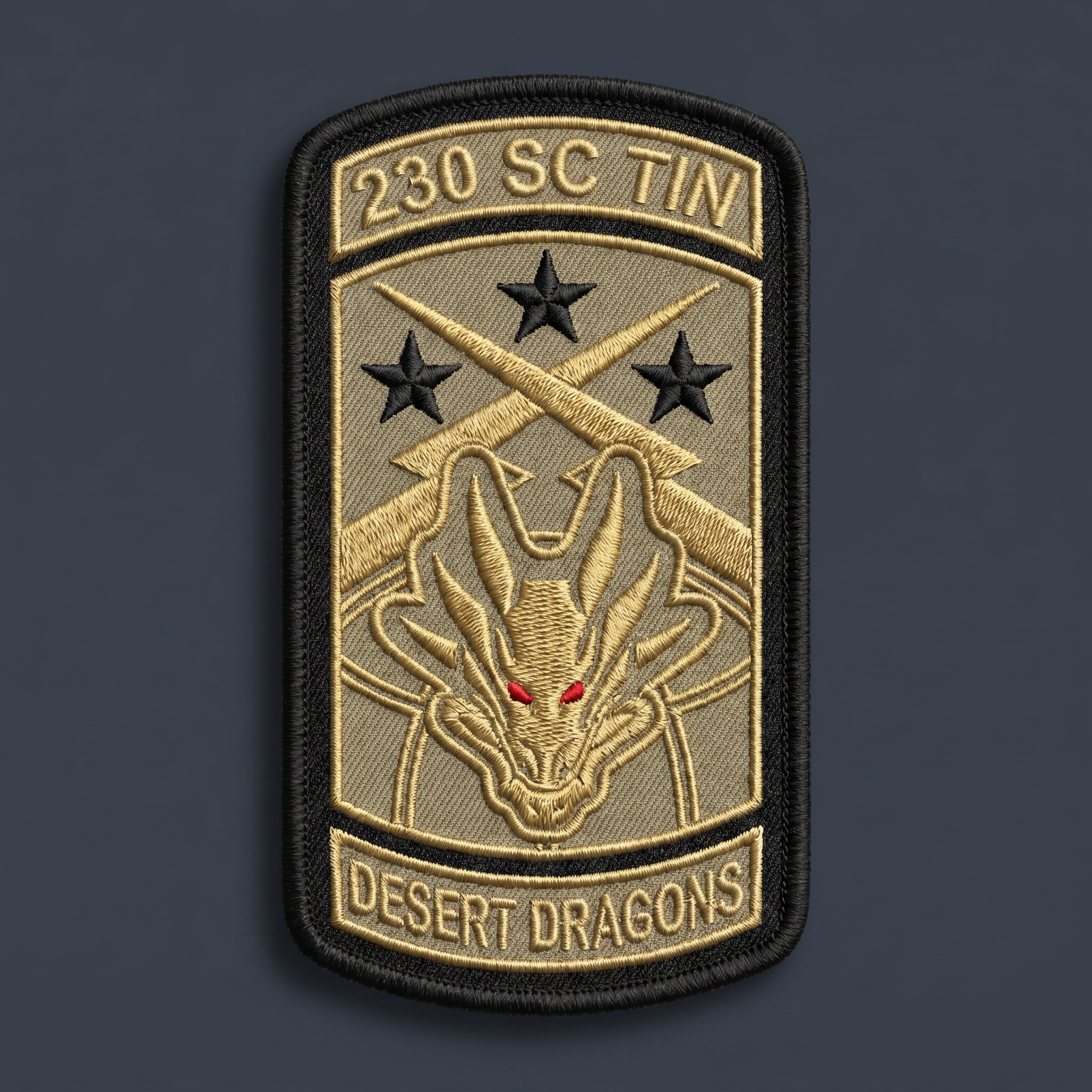
The officer arrived at Kandahar Airfield on approximately 10–11 September 2011 and conducted a Relief in Place / Transfer of Authority with the outgoing rotation. His assessment on arrival was that the mission had not been successfully executed at the forward sites, that continuity documentation and standardized procedures were absent, and that the coordination baseline necessary to run a five-FOB Direct Signal Support Team scheme did not exist. That assessment is recorded in his contemporaneous account and is consistent with what the Officer Evaluation Report describes as the state of the mission set inherited on arrival.
He was placed as Officer in Charge of Direct Signal Support Team operations covering five Forward Operating Bases — Nathan Smith, Pasab, Stone, Wilson (also identified in some source documents as FOB Lagman), and Farah — spanning Regional Command South and, at Farah, Regional Command West. At Kandahar Airfield, communications remained under tactical control of individual supported units; no integrated strategic-to-tactical signal architecture linked the FOB layer to the theater backbone.
Theater signal context on arrival
The state of coalition signal operations at Regional Command South in the period immediately preceding the officer's arrival is documented in the Signal branch's own professional literature. In April 2011, five months before he arrived at Kandahar Airfield, AFCEA's SIGNAL magazine — the professional journal of the Armed Forces Communications and Electronics Association, of which the Signal Corps Regimental Association is a chapter — carried a field report titled "On the Ground in Kandahar." RC-South CJ-6 staff quoted in that article described multinational-coalition signal interference as "one of the most time-consuming problems of their deployment," and identified CENTRIXS-ISAF as the practical in-theater workaround being used at the time. That article is a contemporaneous, Signal-branch, pre-arrival documentation of the operating environment the DSST OIC role was walking into.
The higher theater signal structure that RC-South operated under in 2011 is likewise documented in Army-produced sources. On 26 March 2011, the 25th Signal Battalion — the officer's parent battalion — conducted an assumption-of-responsibility ceremony in Afghanistan, with the Army.mil article describing the battalion as providing "the enterprise communications capabilities necessary to accomplish missions throughout Afghanistan and Qatar" under the 160th Signal Brigade. The 230th Signal Company's DSST scheme, which the officer was placed in charge of six months later, operated inside that battalion-level theater posture.
Conditions found at the forward FOBs
After roughly one week of assessment at Kandahar Airfield and initial visits forward, the officer's account records that the Direct Signal Support Team elements at the forward sites were non-operational. Signal infrastructure was not established, vehicles for logistics and asset transport were not assigned, on-hand and in-transit equipment did not support the mission, and coordination with the FOB Mayor's Cell for resource planning had not been executed. Personnel were living in tents without hardened structures or proper working facilities. Contractor personnel remained undeployed and non-functional at the forward locations.
The resourcing problem
The officer briefed the battalion commander that standard requisition procedures would require an estimated six to seven months minimum for equipment delivery through normal supply channels — a timeline incompatible with mission execution during the rotation. He was authorized to pursue an alternative resource-acquisition approach: tasking personnel to conduct base reconnaissance, identify units with excess equipment, engage in direct lateral coordination between units, and prioritize immediate acquisition over vertical requisition where regulations permitted.
Rebuilding the supply chain in roughly 72 hours
- Vehicles and registration. Through inter-unit lateral coordination, secure exchange arrangements provided half a laydown yard in return for technical training materials. Coordination with excess-vehicle management then yielded five HMMWVs, two LMTVs, and official FOB Mayor's Cell registration — all within approximately 72 hours. The vehicles enabled independent movement and ended dependence on base transportation.
- The Seabee materiel exchange. Reconnaissance identified a Naval Construction Battalion (Seabee) element preparing to redeploy. An agreement provided lumber, hardware, heavy-equipment access, and environmental control units in exchange for morale items needed at the forward sites.
- Distribution. Materials moved by LMTV and C-130 to all DSST locations, enabling construction of operational facilities at sites that had previously been running out of tents.
This three-week effort in September 2011 established the resourcing baseline that made the follow-on FOB Farah work possible. Without the vehicles, materiel, and Mayor's Cell registration secured at Kandahar Airfield, the forward reconstitution at Farah described in the FOB Farah chapter could not have proceeded.
4 October 2011 — VBIED at Gate 2
On 4 October 2011, a vehicle-borne improvised explosive device detonated at the British-run dining facility at Gate 2, Kandahar Airfield, producing blast effects through the structure. This is the first documented combat-exposure event of the deployment and the first of the two blast events reflected in the medical record. A closed-head injury with loss of consciousness followed on or about 12–22 October 2011. See the Medical Record chapter for the full clinical chronology.
Independent public-record coverage
The 230th Signal Company's Kandahar signal work was documented in a Defense Visual Information Distribution Service story, "Sending a strong signal" (DVIDS, October 2011), and in The Lion's Roar, the 25th Signal Battalion newsletter, issue archived here. The DVIDS record also carries a contemporaneous photograph, "Mission essential movements: Five FOBs, two soldiers, and one old school way of getting things done," dated 27 October 2011 at Kandahar Airfield, showing the officer acquiring mission-essential equipment for the 230th Signal Company's five distant Signal Support Teams. The photograph is a government-produced public record contemporaneous with the events described on this page and independently anchors the officer's presence, role, and unit at Kandahar in the timeframe described.
Sources for this chapter
Primary and secondary sources referenced on this page. Where an Army-hosted source has moved, an established public mirror or archive is used.
- "On the Ground in Kandahar," AFCEA SIGNAL Magazine (April 2011) — Signal-branch professional-publication field report from RC-South CJ-6 staff describing multinational-coalition signal interference as "one of the most time-consuming problems of their deployment," five months before the officer's arrival at Kandahar.
- "25th Signal Battalion conducts assumption of responsibility ceremony in Afghanistan," Army.mil (March 2011) — Army-produced record documenting the officer's parent battalion's Afghanistan role six months before his arrival, describing enterprise-communications responsibility across Afghanistan and Qatar under the 160th Signal Brigade.
- "Sending a strong signal," Defense Visual Information Distribution Service (October 2011) — DVIDS coverage of the 230th Signal Company's Kandahar signal operations, with CPT Stephen Haley identified as company commander in the article.
- "Mission essential movements: Five FOBs, two soldiers, and one old school way of getting things done," DVIDS (27 October 2011) — contemporaneous DVIDS photograph from Kandahar Airfield of the officer acquiring mission-essential equipment for the 230th Signal Company's five distant Signal Support Teams.
- The Lion's Roar, 25th Signal Battalion newsletter (2011) — parent-battalion newsletter documenting the 21 July 2011 change of command at Bagram (LTC Edward Borowiec Jr. assuming command) and 230th Signal Company activity in theater.